Elevation certificate Texas cost and quotes from licensed surveyors for existing homes and new builds
A new elevation certificate in Texas typically costs $400 to $900 for an existing single-family home, and $800 to $1,500 for the two certificates a new house in a flood zone needs (one before the slab is poured, one when it is finished). Texas has no statewide public archive of certificates, so check your city or county floodplain office and the seller before you pay for a new one. In Texas the certificate is signed by a Registered Professional Land Surveyor, engineer or architect; surveyors do nearly all of them.
Licensed surveyors · scoped requests · free for clients Up to 3 quotes, matched to your parcel
The price range and turnaround for the job you describe appear here.
Traverse
Estimate for ,
typical local range · on site to drawing
A published range for this type of work, not a quote. Send the request and surveyors listed for your county reply with their own price.
Free for clients · You choose who to talk to
How do I get an elevation certificate in Texas?
Look for an existing one first, then hire a surveyor. Unlike Florida, Texas does not collect elevation certificates in a statewide database. The Texas Water Development Board coordinates the flood insurance program for the state, but the certificates themselves sit with whoever received them: the city or county floodplain office that issued a building permit, the seller, the builder, a past insurance agent or the last closing file. Call the floodplain administrator for your city, or the county engineer if you are outside city limits, and ask for the certificate on file by address.
If nothing turns up, or the certificate no longer matches the house, you need a new one. FEMA says a completed certificate does not expire unless there is a physical change to the building, so an addition, a raised slab, an enclosed garage converted to living space or relocated air conditioning equipment all mean a new visit. A changed flood map for your area is the other common reason.
Who buys one in Texas: a buyer who wants flood insurance priced before the option period ends, an owner trying to lower a flood premium or file a LOMA, and every builder in a mapped floodplain who needs certificates at the slab and at completion to keep a permit moving. Describe the job once on Surveyors.io and up to three licensed Texas surveyors quote it, usually within a day.
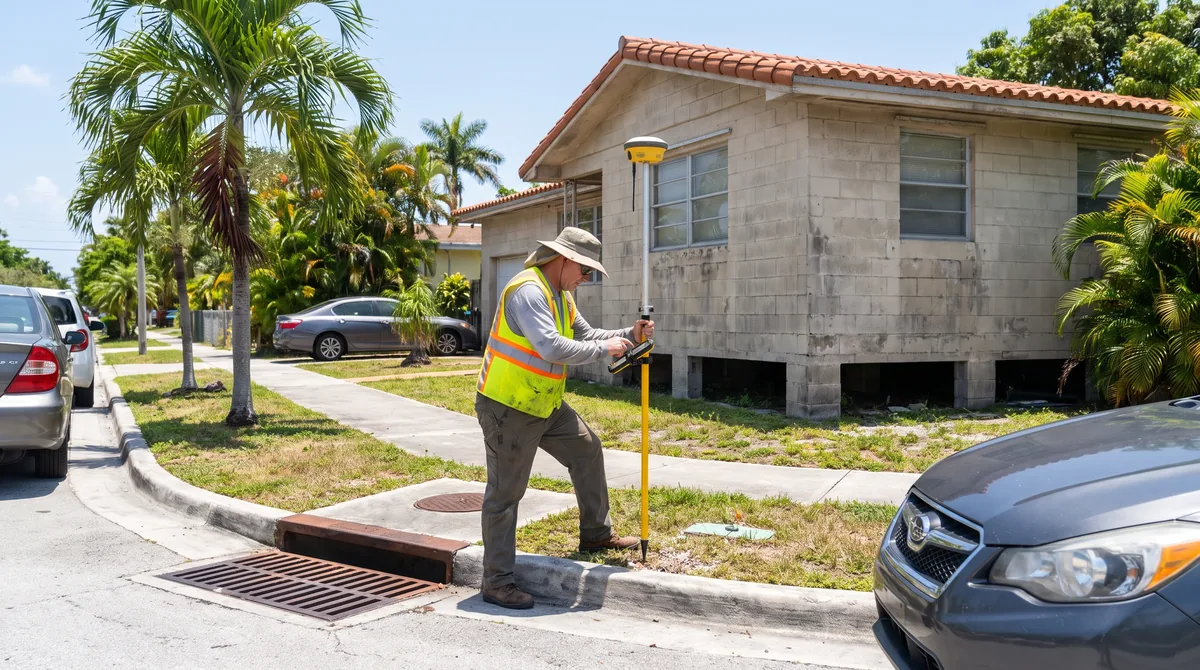
How much does an elevation certificate cost in Texas?
An elevation certificate in Texas usually costs $400 to $900 for an existing single-family home. San Antonio and other inland metros often come in at $350 to $700; coastal homes on piers, and anything with a long drive to a benchmark, cost more.
| What you order | Typical Texas cost | When you need it |
|---|---|---|
| Copy of a certificate on file with the city or county | Usually no surveyor fee | Built under a floodplain permit and unchanged since |
| New certificate, existing single-family home | $400 to $900 | Sale, insurance quote, lender, LOMA, no copy on file |
| Coastal home on piers or piles, or with an enclosure | $700 to $1,500 and up | More levels, openings and equipment to measure |
| Under construction certificate (before the slab) | $400 to $800 | New homes and substantial improvements in a floodplain |
| Finished construction certificate | $400 to $800 | Final floodplain inspection and occupancy |
| Slab and final pair from one firm | $800 to $1,500 | Typical budget for a new house in a mapped floodplain |
| Survey data for a LOMA or LOMR-F | $400 to $900 plus any FEMA fee | Showing the lot or the house sits above the base flood elevation |
City detail and local rules: Houston elevation certificate cost and San Antonio elevation certificate cost. Order both construction certificates from one firm: the crew that shot the forms already has the benchmark set, so the final visit is quicker and the two certificates agree.
Texas flood rules that send owners to a surveyor
Texas leaves floor heights to cities and counties, and several of the big ones regulate well above the FEMA base flood elevation. That local number, not the FEMA map, is what your construction certificates are checked against.
| Texas rule | What it says | What it means for the certificate |
|---|---|---|
| Property Code 5.008, seller disclosure (H.B. 3815, contracts from September 1, 2019) | The seller notice asks whether the home is in the 100-year or 500-year floodplain or a floodway, about flood insurance, past flood claims and FEMA or SBA flood assistance | A yes on any flood question is the moment to order a certificate and price insurance before the option period ends |
| Property Code 92.0135, landlord flood notice (from January 1, 2022) | Landlords must say whether they know the dwelling is in a 100-year floodplain and disclose known flooding in the past five years | A current certificate lets a landlord answer accurately; a tenant who suffers substantial loss after a missing notice may end the lease |
| Water Code 16.3145 | Cities and counties adopt the ordinances needed to take part in the flood insurance program; there is no statewide freeboard rule | The floor height you must hit depends on your city or county |
| Harris County floodplain regulations (2019) | New floors at least 24 inches above the 500-year flood elevation; two certificates, one before the slab and one after construction | Outside Houston city limits, the pre-slab certificate is a gate before the pour |
| City of Houston, Chapter 19 (from September 1, 2018) | New construction in the floodplain is measured against the 500-year flood elevation plus 2 feet | A clean FEMA certificate can still fail the city check |
| City of Austin (from November 25, 2019) | Two feet of freeboard, measured against the 500-year floodplain where updated Atlas 14 maps are not yet in place | Austin floors sit well above the old FEMA base flood elevation |
| City of Dallas, Article V | Design flood based on fully developed watershed conditions; under a fill permit the lowest floor sits at least 3 feet above the design flood elevation | The surveyor needs the city design flood elevation, not only the FEMA map |
Statute text: Texas Property Code sections 5.008 and 92.0135 and Water Code chapter 16 on the Texas Legislature statutes site. City and county rules change; confirm the current floor height with your floodplain administrator before the forms go in.
How to get an elevation certificate in Texas
1.
Ask for the one on file
Call the city floodplain office or the county engineer, and ask the seller, builder or your insurance agent. If a current certificate exists and the house has not changed, you may be done.
2.
Compare quotes from licensed surveyors
Post the job once and get up to 3 quotes. Tell each firm the address, whether it is an existing home or a build, which stage you need, and whether the house is on piers or has an attached garage.
3.
Field visit
The crew measures the top of the slab or lowest floor, the garage floor, the lowest adjacent grade, machinery such as the AC pad, and any flood openings, tied to the vertical datum on the flood map. One visit for an existing home, usually under two hours on site.
4.
Signed and sealed certificate
You receive the certificate, usually within 3 to 10 business days. Send it to your insurer, your lender or the floodplain office, and keep a copy with the deed: the next buyer will ask.
Who can do an elevation certificate in Texas?
The FEMA form is signed and sealed by a land surveyor, engineer or architect authorized by state law to certify elevation information. In Texas that means a Registered Professional Land Surveyor (RPLS), a licensed professional engineer or a registered architect, and Harris County accepts certificates from any of the three. Measuring elevations is part of the legal definition of professional surveying in Occupations Code 1071.002, which is why surveyors complete nearly all of them. Check any RPLS on the Texas Board of Professional Engineers and Land Surveyors roster before you hire; Surveyors.io shows the license number a surveyor entered and says on the profile that we have not verified it.
A few details decide whether the certificate helps you. It must reference the current flood map panel and the right vertical datum, and it should record the street crown when your county measures floors against it. On new construction, ask the surveyor to confirm the required floor height with the floodplain office before the forms survey, because fixing a slab after the pre-slab certificate fails is the most expensive mistake in this process.
If the certificate shows the lot or the slab sits above the base flood elevation, a LOMA or LOMR-F may take the building out of the mapped flood zone and end the lender requirement for flood insurance. See the LOMR-F survey page and the LOMA flood zone removal guide.
Texas elevation certificate questions
How much does an elevation certificate cost in Texas?
A new elevation certificate in Texas usually costs $400 to $900 for an existing single-family home, often $350 to $700 in San Antonio and other inland metros. Coastal homes on piers cost more. A new house in a floodplain needs a pre-slab and a finished certificate, typically $800 to $1,500 for the pair.
Is an elevation certificate required in Texas?
It is required for new construction and substantial improvements in a mapped floodplain, because the city or county uses it to confirm the floor height; Harris County asks for one before the slab and one after construction. It is not required to buy flood insurance, but it can lower the premium.
How do I find an elevation certificate for my house in Texas?
Texas has no statewide database. Ask the city floodplain office, or the county engineer outside city limits, for the certificate submitted with the building permit. Then ask the seller, the builder and past insurance agents. If none exists or the house has changed, order a new one from a licensed surveyor.
Who can do an elevation certificate in Texas?
A Registered Professional Land Surveyor, a licensed professional engineer or a registered architect authorized to certify elevations can sign it. Surveyors complete nearly all of them in Texas. Verify the RPLS license on the state board roster before you hire.
How long is an elevation certificate good for in Texas?
It does not expire on a date. FEMA treats a completed certificate as valid until the building physically changes, for example an addition, a raised or new slab or relocated equipment. A new flood map for your area is the other reason to order a new one.
Does an elevation certificate lower flood insurance in Texas?
It can. Under FEMA current rating the certificate is optional, and policyholders may submit one to see if it lowers the rate. It helps most when the lowest floor sits above the base flood elevation, which is common on newer Houston and Harris County homes built to 500-year standards.
Three quotes beat six voicemails
Describe the parcel once. Your scoped request goes to licensed surveyors listed for your county and they quote it themselves. Posting is free for clients and quotes are never marked up.